Fuel Price Increase Triggers Warning to Rwandan Traders
Ministry of Trade and Industry has warned traders against raising prices of goods without justification following an (…)

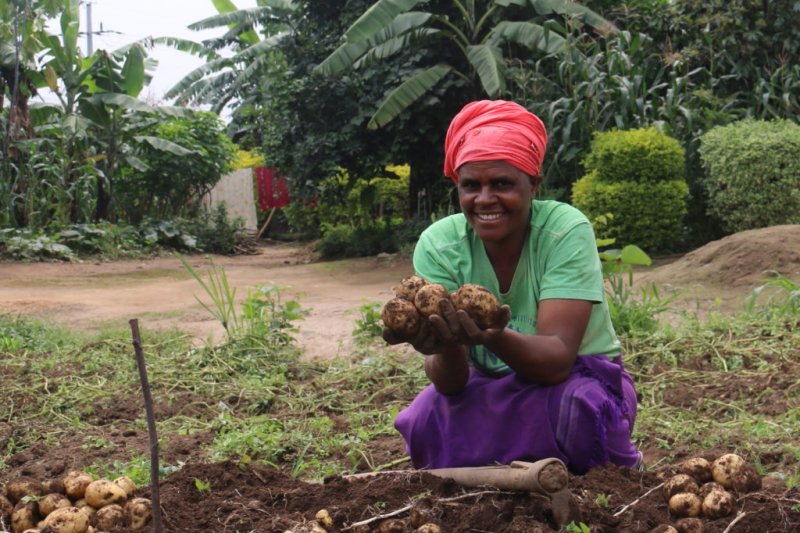
Farmers who grow potatoes often spray fungicides at least twice a week to control late blight, a disease caused by the fungus Phytophthora infestans. The disease, known locally as “indwara y’imvura,” can devastate crops and reduce yields.
Researchers are testing new potato seeds that are resistant to late blight, and early results are promising, according to Dr. Patrick Karangwa, director general in charge of modernizing agriculture at the Ministry of Agriculture and Animal Resources.

“Research on potato seeds resistant to late blight is advanced,” Karangwa said. “This means that the seeds will not need fungicides to fight the disease.”
He said recent trials showed the new variety produced 34 to 36 tons per hectare without chemical treatment. In comparison, conventional potato seeds yielded 2 to 3 tons per hectare under the same conditions, he said. The trials were conducted in neighboring fields with similar soil and climate.
Karangwa said farmers have visited trial sites and asked why the seeds are not already available. He said the research must be completed in multiple regions and seasons to confirm the results.
“We need to know if these seeds perform well in the south, the north and other areas,” he said. “We must also evaluate different growing seasons. Only then will the seeds be released with confidence.”
Currently, potato seeds grown across Rwanda yield 8 to 9 tons per hectare. If the new variety is released, it could triple production.
Dr. Athanase Nduwumuremyi, a researcher at the Rwanda Agriculture and Animal Resources Board, said the seed will be distributed through the existing system once research is complete. He said it will be sold at the same price as regular seeds and will mature in the same time frame.
“Farmers who plant these seeds will benefit greatly because they will invest less and harvest more,” Nduwumuremyi said.
On Feb. 6, 2026, a harvest event in Musanze District showcased trials of the Victoria and Kungahara varieties, which produced 35 tons per hectare without fungicide. The varieties were also tested in Rubavu, Nyamagabe and Burera districts, where they showed high yields.
Ministry of Trade and Industry has warned traders against raising prices of goods without justification following an (…)

The vice president of the African Volleyball Confederation, Louis Rwakiranya, said there are no concerns about (…)
Heifer International Rwanda has taken 12 finalists in the AYuTE Africa Challenge 2026 into a four-day training (…)

Rwanda and Uganda have reaffirmed their commitment to strengthening bilateral ties following a joint meeting held in (…)