Rwanda launches first upper-air weather monitoring station
Rwanda on Thursday inaugurated its first Automatic Upper-Air Station, a facility designed to strengthen the (…)

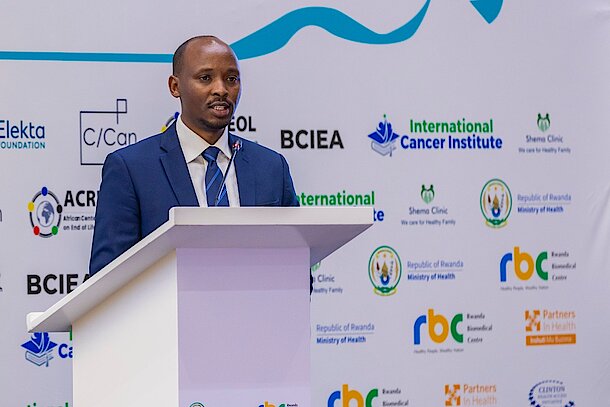
Cervical cancer remains one of the leading health threats to women in Rwanda, second only to breast cancer, with more than 700 new cases recorded each year. The disease accounts for roughly one in six cancer-related deaths in the country, according to the Rwanda Biomedical Centre.
RBC released the figures as it launched a nationwide cervical cancer screening campaign on Nov. 17, 2025. Officials say cases have risen sharply over the past 15 years. Rwanda reported 633 cases in 2007; by 2022, that number had climbed to 5,263. Between 2016 and 2022 alone, 747 women died from the disease.
Dr. François Uwinkindi, who heads the Noncommunicable Diseases Division at RBC, said the increasing toll is the reason Rwanda has set a goal to eliminate cervical cancer by 2027. Reaching that target, he said, requires strong vaccination, regular screening and accessible treatment.
Rwanda began vaccinating girls ages 12 to 15 against the human papillomavirus — the virus that causes cervical cancer — in 2011. The program reached 90 percent coverage, meeting the World Health Organization’s recommendation. But Uwinkindi said many women over 30 were never vaccinated, making screening critical.
“Screening is still our biggest gap,” he said. “We are at about 30 percent, and our goal is to reach 70 percent by 2027.”
Under the new campaign, women ages 30 to 49 are urged to visit nearby health centers for free screening. Hospitals across the country have been equipped to treat women who test positive or show symptoms, and specialized cancer clinics are in place for advanced cases.
Cervical cancer often develops without symptoms in its early stages. Once it progresses, women may experience abnormal bleeding, foul-smelling discharge or unusual vaginal fluids. HPV spreads primarily through sexual contact but can also be transmitted through contact with contaminated surfaces.
Early detection can be lifesaving, said cervical cancer specialist Euloge Nzabonankira. “When we catch it early, precancerous changes can be treated before they become cancer,” he said.
Some women avoid screening out of fear, but health workers say the current method allows women to collect their own samples privately.
To meet Rwanda’s 2027 goal, community health workers have begun door-to-door outreach to register all women over 30 and women 25 and older living with HIV, who face higher risk.

Rwanda on Thursday inaugurated its first Automatic Upper-Air Station, a facility designed to strengthen the (…)

Rwanda Development Board (RDB) has temporarily suspended operations at four hotels after inspections found they (…)

Electric bus company BasiGo plans to introduce 18 new electric passenger buses in Rwanda as part of efforts to (…)

Minister of Foreign Affairs and International Cooperation, Olivier Nduhungirehe, met South Korean President Lee Jae (…)