Cabinet approves national artificial intelligence institute
The Cabinet has approved the establishment of a national artificial intelligence institute to advance the (…)

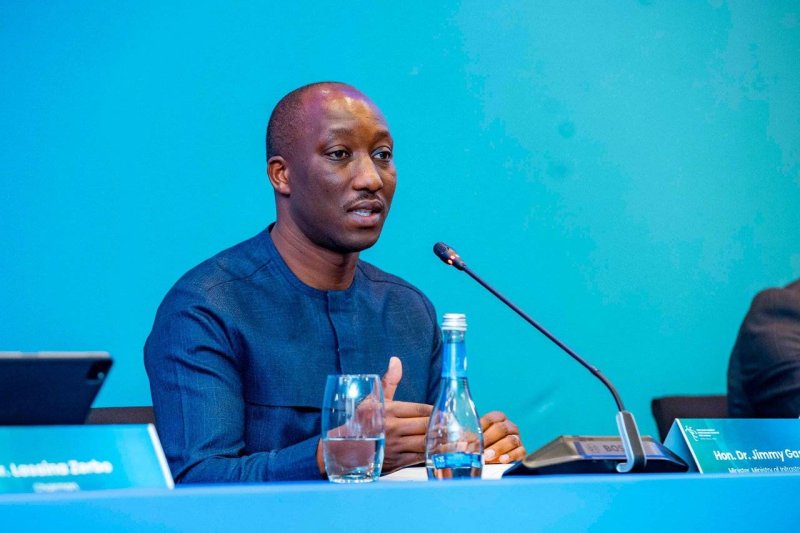
Government is preparing to overhaul its long-struggling biogas program after lawmakers raised concerns about widespread system failures and continued dependence on environmentally harmful cooking fuels.
Infrastructure Minister Jimmy Gasore told senators on Nov. 26 that the biogas initiative, launched in 2006, has not delivered the results the government expected. More than 10,000 digesters were built nationwide, but an assessment found that only 15% remain operational.
“The project did not achieve its expected goals, despite having significant potential,” Gasore said. He cited weak project preparation, inadequate day-to-day monitoring and poor selection of beneficiaries as major factors behind the program’s collapse.
Senators questioned why the program had deteriorated and pressed the ministry to revive it. Their concerns followed the release of the Seventh Integrated Household Living Conditions Survey (EICV7), which showed that only 5.4% of Rwandan households used environmentally friendly cooking fuels in 2024 as an improvement from 1% in 2017, but still far from national targets.
According to the survey of 15,066 households, 75% of Rwandans continue to cook with firewood, 18.8% rely on charcoal and 0.6% use crop residues.
Sen. Donatille Mukabalisa said biogas could significantly reduce reliance on firewood, particularly in rural areas, if the program were implemented correctly. “More than 75% of the digesters are no longer functioning,” she said. “Have you assessed why they failed so you can correct the issues?”
Sen. Uwera Peragie asked what new steps the government plans to take to ensure biogas remains a viable clean-cooking option. Sen. Frank Habineza said it was “unfortunate that so much money was invested with no results,” noting that biogas performs well where properly managed, such as in prisons.
A report from the Auditor General for the year ending June 30, 2022, showed that 8,354 of the 10,913 digesters built across the country were not functioning, despite more than 3 billion Rwandan francs in government subsidies.
Gasore said the revamped program will target households that can sustain biogas use for those with at least three cows, reliable access to water and adequate animal feed. A pilot project underway with UNDP in Eastern Province is showing promising results, he said, and the government plans a gradual expansion to avoid previous failures.

The Cabinet has approved the establishment of a national artificial intelligence institute to advance the (…)
The International Monetary Fund (IMF) has approved a $250 million loan for Rwanda under its Extended Credit Facility (…)
Rwanda on Thursday inaugurated its first Automatic Upper-Air Station, a facility designed to strengthen the (…)

Rwanda Development Board (RDB) has temporarily suspended operations at four hotels after inspections found they (…)