University of Rwanda Leads €15.3M Chikungunya Vaccine Project
The University of Rwanda (UR), has launched a four-year international research project aimed at developing a vaccine (…)

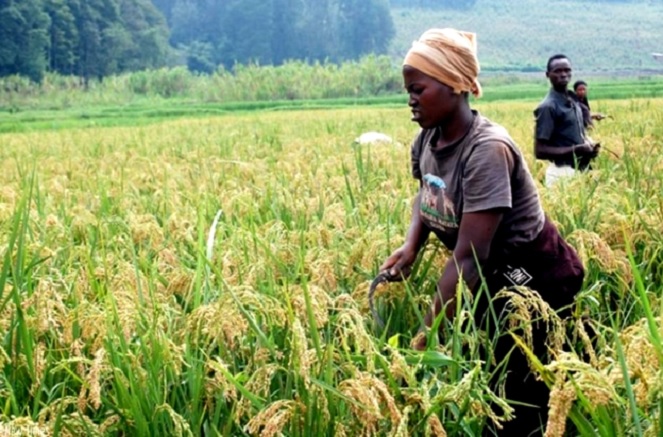
Rwanda recorded slight increases in the production of major food crops during the 2026 Season A harvest, according to a report released on Wednesday, by the National Institute of Statistics of Rwanda (NISR).
The report shows potato production rose by 3.3% to 491,564 tons, while sweet potatoes increased by 3% to 675,768 tons. Banana production grew by 4.1%, exceeding 1.3 million tons.
Season A is the country’s main agricultural season, producing about 70% of Rwanda’s total food supply.
More than 1 million hectares were cultivated with seasonal crops, while 501,000 hectares were planted with long-cycle crops.
Maize was grown on 245,405 hectares, beans on 327,907 hectares and potatoes on 55,310 hectares. Sweet potatoes covered 96,217 hectares, cassava 236,357 hectares and bananas 267,676 hectares.
Maize production rose by 1.5% to 488,622 tons compared with Season A of 2025, while beans increased by 0.5% to 229,396 tons. Rice production reached 71,080 tons, up 2%.
Key staple crops on local markets, including potatoes and sweet potatoes, recorded steady gains, alongside bananas, which also posted an increase compared with the same period last year.
However, the increase in production comes amid rising prices. NISR reported that consumer prices increased by 9.2% in March 2026 compared with March 2025.
Food and nonalcoholic beverage prices rose by 4.1%, while prices for alcoholic beverages and tobacco increased by 17.8%. Housing, water, electricity, gas and other fuels rose by 14.6%.
The report also highlights increased use of irrigation, especially among large-scale farmers. Overall, 14.4% of farmers used irrigation, including 12.6% of smallholder farmers and 60.3% of large-scale farmers.
Among those using irrigation, 66.4% adopted modern irrigation methods.
Use of agricultural inputs also remained notable, with 37% of farmers using improved seeds. Organic fertilizers were used by 90.2% of farmers, mineral fertilizers by 67.2% and pesticides by 46.9%.

The University of Rwanda (UR), has launched a four-year international research project aimed at developing a vaccine (…)

The Cabinet has approved the establishment of a national artificial intelligence institute to advance the (…)
The International Monetary Fund (IMF) has approved a $250 million loan for Rwanda under its Extended Credit Facility (…)
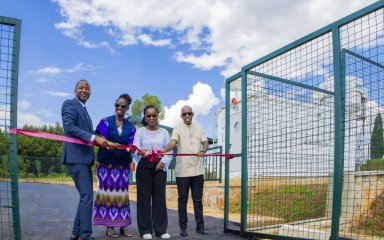
Rwanda on Thursday inaugurated its first Automatic Upper-Air Station, a facility designed to strengthen the (…)