MINUBUMWE updates strategy to combat hate speech, promote unity
The Ministry of National Unity and Civic Engagement (MINUBUMWE) says it is updating its strategy to prevent and (…)


Rwanda’s financial landscape took a significant step toward full digital integration with the nationwide launch of eKash, an interoperable payment platform that enables instant, low-cost transfers across banks, mobile money operators and financial institutions.
Unveiled last year in December at a high-level ceremony in Kigali, eKash is part of the Rwanda National Digital Payments System (RNDPS) and reflects years of policy planning and investment aimed at breaking down silos in the country’s payment ecosystem.
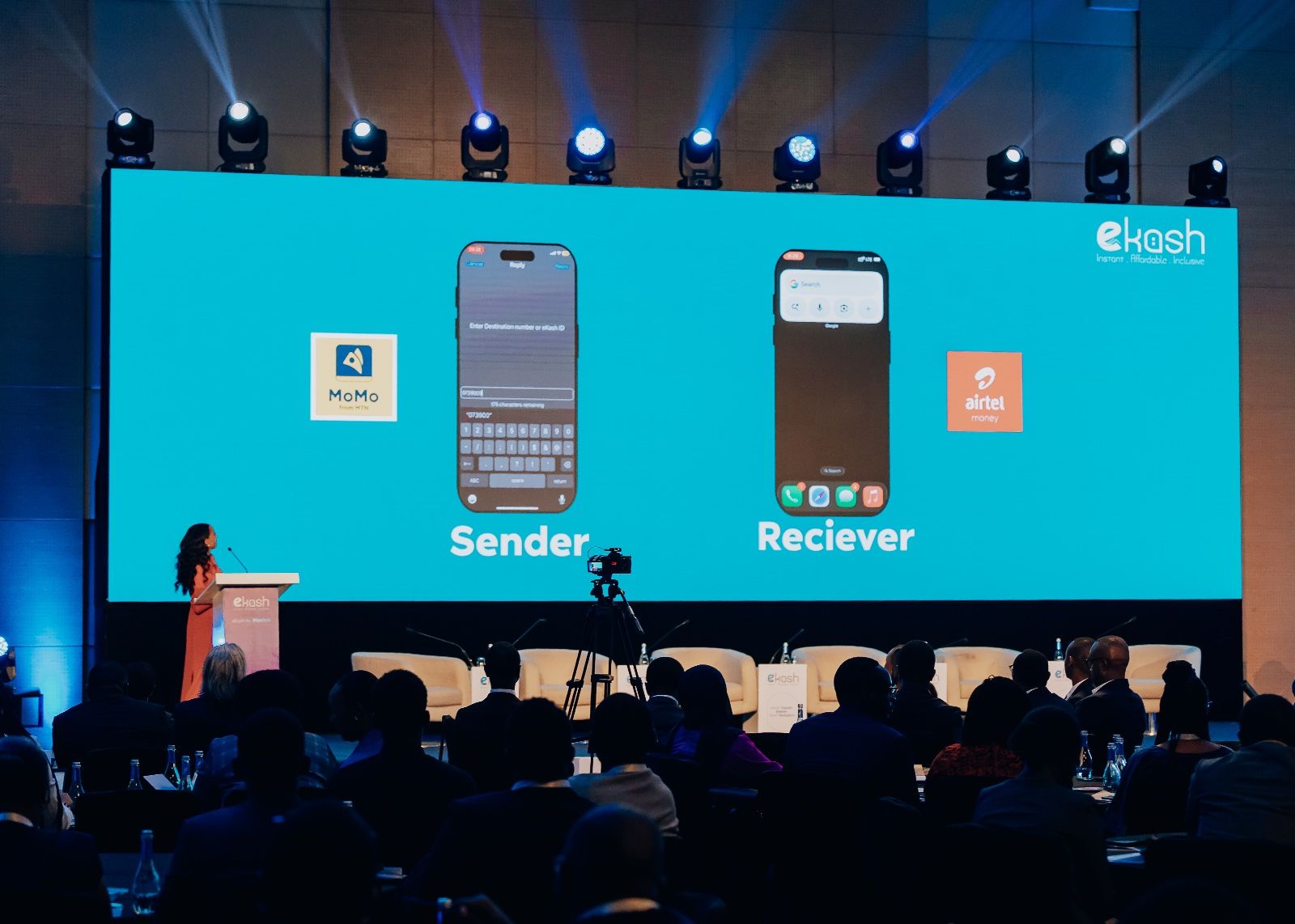
The platform, developed and operated by RSwitch, now connects 22 institutions, including major banks and mobile money providers MTN and Airtel, facilitating seamless person-to-person and person-to-business transactions.
“Today marks a milestone in our journey toward a truly cashless, inclusive economy,” said Paula Ingabire, Rwanda’s Minister of ICT and Innovation, at the launch. “Interoperability unlocks innovation, enabling fintechs and businesses to reach more customers and provide a richer set of services.”
Bridging fragmented payments
Before eKash, digital transactions in Rwanda were constrained by incompatible systems. Users often needed to withdraw cash from one service and deposit it into another or rely on separate mobile money and banking platforms that did not communicate. That fragmentation imposed costs and time burdens, particularly for small businesses and consumers in rural areas.
eKash eliminates these barriers, allowing users to send money instantly between accounts regardless of provider. Transactions typically settle in under 15 seconds and can be initiated through existing mobile USSD codes, bank apps or internet banking platforms.
According to RSwitch CEO Blaise Gasabira, more than 47 million transactions valued at over Rwf203 billion have already been processed on eKash, with more than 21 million registered users since its rollout. Gasabira described the platform as foundational infrastructure that “connects and simplifies digital payments in the country.”
Driving cost efficiency and inclusion
The cost of financial transactions is expected to decline sharply under eKash. Early data from financial sector participants show that transfer fees can be as low as Rwf250 a fraction of the combined fees previously incurred when moving funds between networks.
For individuals and small businesses, the savings can be significant. Merchants, in particular, benefit from a single payment interface that eliminates the need for multiple terminals or wallets. “As a shop owner, finally being able to accept payments from any wallet without multiple devices has helped improve my cash flow and reduce costs,” said Jean Claude Nkurunziza, a Kigali café owner who adopted eKash early in its deployment.
Economists say such efficiencies can deepen financial inclusion by lowering barriers for underserved populations. According to a report by Access to Finance Rwanda and central bank research, Rwanda’s digital payments have surged in recent years, with mobile transactions accounting for a growing share of economic activity.
eKash is rooted in Rwanda’s broader fintech strategy, which emphasizes digital transformation, financial inclusion and economic modernization. The platform draws on open-source technology and years of collaboration among government agencies, the private sector and development partners, including AfricaNenda, the Gates Foundation and GIZ.
“The National Payment System Strategy has guided us toward this moment,” said Prime Minister Dr. Nsengiyumva, at a recent financial conference. He noted that digital payments accounted for more than 300% of GDP in recent years, driven by rapid adoption of mobile and online banking.
Regional potential and future growth
Rwanda is positioning eKash as a model for East Africa, where interoperability remains a challenge. Technical talks with Tanzania aim to link national instant payment systems, enabling cross-border transfers that settle in real time a potential boon for trade and remittances across the East African Community.
In the short term, eKash plans to expand use cases to include government payments and bulk transactions, further embedding digital finance into public services and business operations.
Analysts say eKash’s success could attract investment in Rwanda’s fintech sector while demonstrating a scalable model for other emerging markets striving for interoperable, inclusive payment systems.
“Rwanda’s approach shows that building robust digital infrastructure can stimulate economic participation, reduce costs and support broader development goals,” said an independent fintech consultant based in Nairobi.
With clear government support, expanding service offerings and growing transaction volumes, eKash’s rollout signals a transformative shift in how money moves in Rwanda and potentially across the region.

The Ministry of National Unity and Civic Engagement (MINUBUMWE) says it is updating its strategy to prevent and (…)

Rwanda loses an estimated 150,000 tons of agricultural produce annually which is equivalent to nearly 30 percent of (…)

Awareness of autism is growing in Rwanda as health and education officials call for earlier identification, improved (…)

Rwanda has reaffirmed its commitment to strengthening East African integration as President Paul Kagame held talks (…)