Autism awareness grows in Rwanda as officials highlight need for support
Awareness of autism is growing in Rwanda as health and education officials call for earlier identification, improved (…)

Rwanda’s economy expanded sharply in the early phase of its second five-year National Strategy for Transformation (NST2), the government reported Thursday, citing rapid growth in agriculture, industry and services and a steep decline in unemployment.
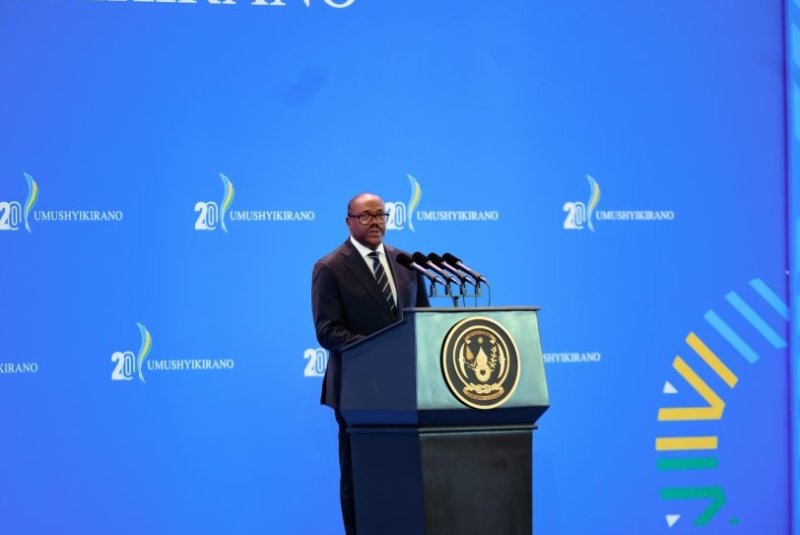
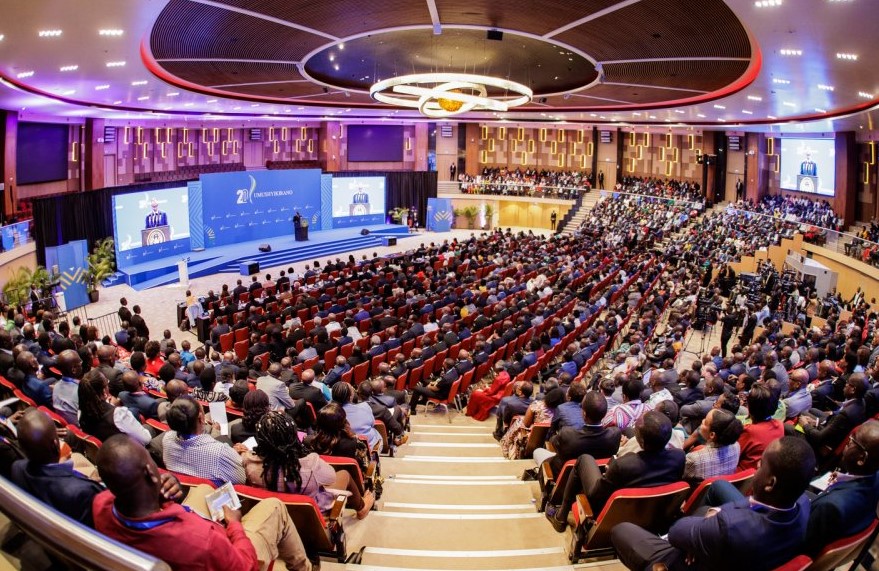
Prime Minister Dr. Justin Nsengiyumva presented the progress at the National Consultative Forum (Umushyikirano) on Feb. 5, saying the economy grew 8.7% in the first three quarters of 2025, with quarterly growth of 6.5%, 7.8% and 11.8% respectively.
“This shows that our national economy continues to grow at a good pace, giving confidence that we will achieve the goals we have set,” Nsengiyumva said.
The agriculture sector grew an average of 7% in 2025, up from 5% in 2024. Industry expanded 10%, while services grew an average of 9%.
The prime minister said the growth has helped reduce unemployment to 11.7% at the end of 2025, down from 16.8% in 2024 and 24.3% in 2022. He said the government exceeded its target of creating 250,000 jobs annually, reporting more than 800,000 jobs created since 2024, with 93% of them outside agriculture.
Export revenues rose sharply, Nsengiyumva said, increasing from $3.5 billion in 2023/2024 to $5.7 billion, a 67.8% jump. Rwanda aims to reach $7 billion in exports by 2029.
“This increase in export value has helped reduce the gap between exports and imports, showing that the country is gradually building self-reliance,” he said.
Tax and non-tax revenues reached 3,000.2 billion Rwandan francs, while domestic savings rose to 15.6% of gross domestic product from 12%. The long-term savings program Ejo Heza received 52.8 billion francs in contributions in 2024/2025. Private sector investment increased from $2.2 billion to $2.7 billion, with a target of $4.6 billion annually.
Nsengiyumva said the government has made “significant economic progress” in two years and urged continued collective effort.
He highlighted gains in agriculture, including higher fertilizer use, which rose to 74 kilograms per hectare from 32 kilograms in 2017. The government aims to reach 94.6 kilograms per hectare by 2029. Irrigated land increased to more than 74,000 hectares from 71,000 hectares in 2023/2024, with a 2029 target of 134,000 hectares.
Terraced land now covers 146,000 hectares, with a target of 167,000 hectares, while radical terraces cover more than 1.04 million hectares. Milk production exceeded 1 billion liters annually, up from more than 700 million liters in 2017.
In industry, the government is prioritizing self-sufficiency through investment and capacity building in mining, agro-processing, livestock processing and construction. The mining sector recorded 12% growth, up from 9% in 2023, and averaged 8% growth in the first three quarters of 2025.
The tourism sector generated about $647 million, up from $620 million, with a target of $1.1 billion under NST2. The government plans to invest in tourism infrastructure, including the new Kigali International Airport, hosting international conferences and organizing sporting events.
In 2024/2025, the program generated $108 million, up from $95 million, with a target of $224 million.
The government has also advanced urban planning and housing, completing 25 of 28 planned master plans. It has resettled residents living in high-risk areas and expanded electricity access to 82.9% of households and 89% in development zones, up from 86% at the start of NST2.
Energy projects under construction include petroleum storage facilities and expanded electricity generation, including Nyabarongo II (58 megawatts), the Gishoma peat power plant (15 megawatts), a 100-megawatt methane gas project, and an expansion of the Gisagara peat plant to 80 megawatts from 25 megawatts.
Clean water access reached 84% of villages, up from 80% in 2023/2024, supported by new treatment plants in Saki and Ngororero.
Road construction has focused on feeder roads to connect farmers to markets. Nationwide, feeder roads now total 4,200 kilometers, alongside 600 kilometers of national roads. Kigali is expanding major roads and modernizing intersections, and Ecofleet was launched to improve public transport.
Rwanda has also reduced greenhouse gas emissions by 28%, with a target of 38% by 2029. The government has launched wetland restoration projects and a tree-planting program targeting 72 million trees, with more than 26 million planted.
In health, maternal mortality declined to 97 deaths per 100,000 live births in 2025 from 105 in 2023/2024, and under-five mortality fell to 39.4 deaths per 1,000 children from 45. The government plans to expand health infrastructure, including Masaka Hospital and expansions at King Faisal Hospital, Ruhengeri, Muhororo and Kabgayi.
In education, the government is advancing reforms and partnering with the private sector to expand technical and vocational education. The goal is to raise enrollment in technical and vocational education and training to 60% of secondary students from 38%.
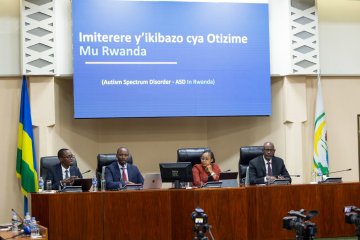
Awareness of autism is growing in Rwanda as health and education officials call for earlier identification, improved (…)

Rwanda has reaffirmed its commitment to strengthening East African integration as President Paul Kagame held talks (…)

The Mastercard Foundation has launched a new initiative to strengthen technology education in Rwanda, supporting (…)

Liberian government officials are in Rwanda this week to study digital governance systems that have helped (…)