University of Rwanda Leads €15.3M Chikungunya Vaccine Project
The University of Rwanda (UR), has launched a four-year international research project aimed at developing a vaccine (…)

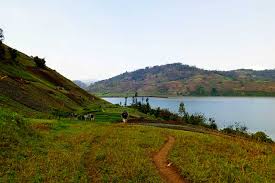
Rwanda’s project to restore the Congo-Nile Ridge has reached 20 percent completion, officials said on Thursday last week, marking progress in efforts to combat soil erosion, conserve water, and support agriculture.
The Congo-Nile Divide (CND) project covers 10 districts in western and southern Rwanda, including Musanze, Nyabihu, Rubavu, Ngororero, Rutsiro, Karongi, Nyamasheke, Rusizi, Nyamagabe, and Nyaruguru. The ridge, a chain of hills separating the Nile and Congo River watersheds, has faced erosion and wildfires that disrupted local ecosystems.
Jean Claude Ngendambizi, a worker managing tree seedlings, said he earns 4,000 RWF ($3.80) per day.
“This project helps us pay for health insurance, school fees, and savings programs,” he said. “It protects farmland that was previously lost to erosion.” The project includes planting indigenous trees, building contour terraces, protecting riverbanks, and restoring 1,500 hectares in Nyungwe National Park and 500 hectares in Gishwati-Mukura National Park.
Dr. Emmanuel Rukundo, director-general of the Rwanda Water Resources Board, said degraded ridges pollute rivers and raise water treatment and hydropower costs. “Water is life. Polluted water spreads disease and damages infrastructure,” he said.
Dr. Concorde Nsengumuremyi, director-general of the Rwanda Forestry Authority, said indigenous trees resist disease, tolerate climate change, filter polluted air, and provide wildlife habitats. “We also plan to restore 1,000 hectares of degraded land and build terraces in Karongi and Rutsiro,” he said.
Launched in 2024, the project is scheduled to finish in 2028 with a cost exceeding 66 billion RWF ($63million). Officials said early progress offers confidence the initiative will achieve its environmental and economic goals.
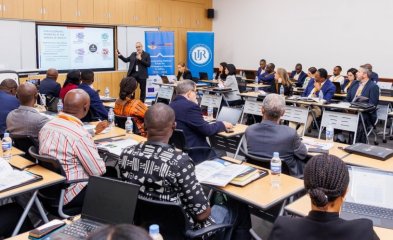
The University of Rwanda (UR), has launched a four-year international research project aimed at developing a vaccine (…)

The Cabinet has approved the establishment of a national artificial intelligence institute to advance the (…)
The International Monetary Fund (IMF) has approved a $250 million loan for Rwanda under its Extended Credit Facility (…)
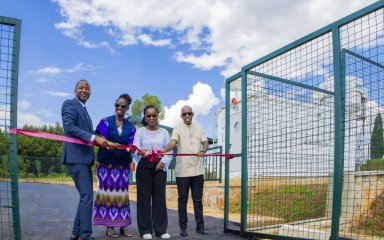
Rwanda on Thursday inaugurated its first Automatic Upper-Air Station, a facility designed to strengthen the (…)