Mastercard foundation launches Rwanda program to expand digital skills training
The Mastercard Foundation has launched a new initiative to strengthen technology education in Rwanda, supporting (…)

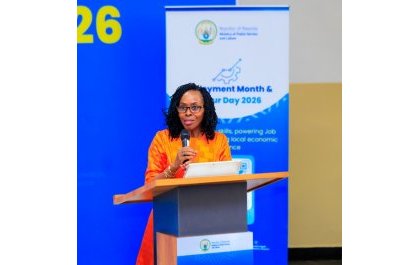
Rwanda’s Minister of Public Service and Labor, Amb. Nkulikiyinka Christine, is calling on employers across all sectors to remove barriers to internships and job learning opportunities for students.
Speaking on May 1, 2026, during the country’s observance of International Workers’ Day, Nkulikiyinka emphasized the importance of providing young people with real-world work experience.
International Workers’ Day in Rwanda is a time for government officials, employers, and workers to come together, reflect on labor progress, and discuss strategies for improving services and creating more job opportunities.
This year’s theme was "Collaboration in Promoting Knowledge, Increasing Job Creation, and Strengthening Domestic Economic Resilience."
In her speech, Nkulikiyinka highlighted the critical role that both employers and workers play in advancing Rwanda’s economic development and improving living standards. She underscored that promoting decent work opportunities is essential for long-term growth.
"This day is an opportunity to reaffirm the importance of decent work, as it gives everyone the chance to contribute to sustainable development," she said.
The Minister also pointed out that Rwanda’s economy has experienced significant growth, which has led to a drop in the unemployment rate. In 2025, the unemployment rate decreased to 12.4%, down from 15% the year before.
"These numbers show that the policies being implemented are producing results, but there is still much more to be done to create high-quality jobs," she added.
Nkulikiyinka explained that this year’s theme aligns with the government’s vision of building a knowledge-based economy. She emphasized that fostering collaboration to enhance education and skills development is key to helping Rwanda’s youth access the opportunities they need in the job market.
"This collaboration is particularly evident in the private sector’s role in identifying market demands and offering opportunities for young people to gain hands-on experience," she said.
While she thanked employers who are already providing internships for students, she urged those who haven’t yet gotten involved to step up their efforts.
"I encourage all employers—whether in the private sector, public institutions, or civil society—to continue welcoming young people and giving them opportunities to gain work experience," she said.
“Let’s make it easier for the youth to participate, so we can all contribute to building the country we envision."
The Minister also urged young people to develop resilience, embrace innovation, and commit to lifelong learning, especially as technology continues to reshape the workforce.
Ivan Murenzi, director-general of the National Institute of Statistics of Rwanda (NISR), shared that over the past three years, his organization has prioritized internships for students and recent graduates. He noted that each year, between 50 and 100 students studying economics, statistics, and related fields are offered internships.
He further explained, "Consider the impact if over 550 large institutions, along with NGOs and other organizations, offered internships to 100 or more people annually. That would have a major effect on the country’s economy."
"By offering these opportunities, young people gain the experience needed to create their own businesses and generate jobs," Murenzi added.
Minister of Education Nsengimana Joseph also commended the private sector for its ongoing efforts to provide job opportunities for young people, particularly those still in school.
“I thank the private sector for supporting the government in providing work and training opportunities for young people, especially those in school,” he said.
According to NISR data from 2025, Rwanda had 8.5 million people aged 16 and older eligible to work, with 4.8 million currently employed.
The number of unemployed individuals stood at 676,000, while more than 3.1 million were not in the labor force. This group includes students, the elderly, people with severe disabilities, and those who have stopped looking for work.
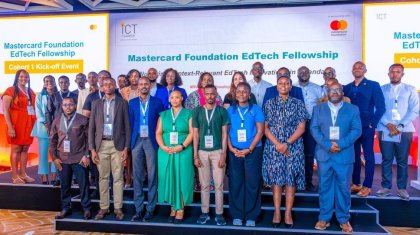
The Mastercard Foundation has launched a new initiative to strengthen technology education in Rwanda, supporting (…)

Liberian government officials are in Rwanda this week to study digital governance systems that have helped (…)
Rwanda has pledged continued support for East African integration as the East African Community (EAC) begins public (…)

Rwanda plans to spend about 9.8 billion Rwandan francs ($6.7 million) to restore sections of Nyungwe National Park (…)