

 RW
Algeria is forcing France to confront its colonial crimes
The issue of colonial legacy remains a sensitive one in relations between African states and France. For many years, (…)

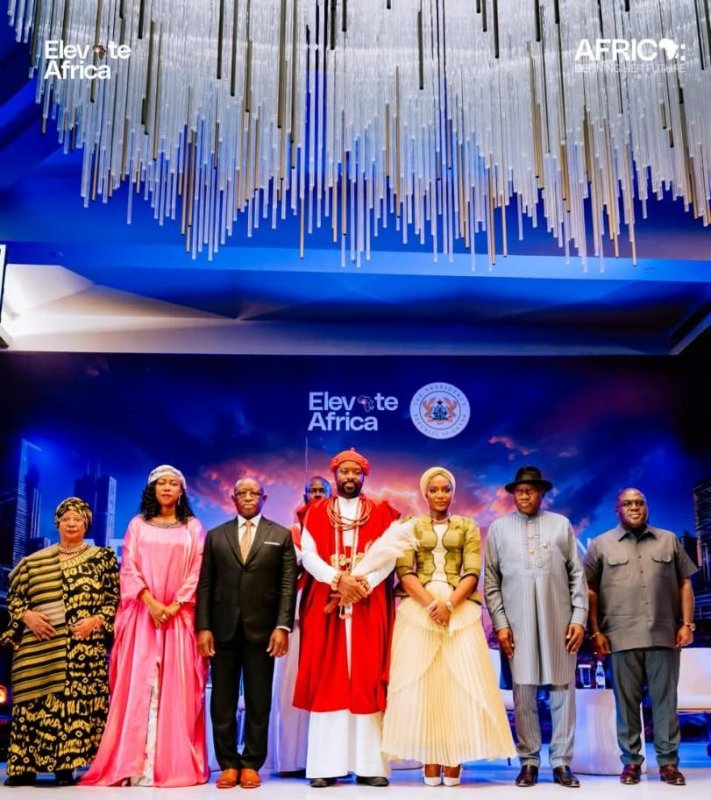
The convening of Elevate Africa 2026 in Accra this past October was not short on pageantry, nor on the familiar eloquence of continental aspiration. Under the theme “Africa: Defining Her Future,” heads of state, traditional leaders, business leaders, policymakers, the diaspora, youth leaders and many others gathered to grapple with a question that has haunted the post-colonial project for generations: why does political sovereignty so rarely translate into economic sovereignty?
The answer that emerged from the Mövenpick Ambassador Hotel is as uncomfortable as it is necessary. Africa does not suffer from a deficit of ideas, resources, or talent. It suffers from a structural failure to own, control, and retain the value of what it produces. The Accra Declaration of Commitment, signed by leaders in their personal capacities, attempts to codify a break from this pattern. But a declaration is only as valuable as the policy architecture that follows it. If the commitments made in Accra remain confined to the banquet halls of Ghana’s capital, the convening will have been a costly exercise in rhetoric. If they are translated into enforceable, financed, and accountable policy, they could mark a genuine inflection point.
The Ownership Deficit
Perhaps the most piercing intervention of the convening came from Olori Atuwatse III, Queen Consort of the Warri Kingdom and co-founder of Elevate Africa, who articulated what she termed the “receipt problem.” Africa, she noted, earns roughly one dollar from every one hundred dollars generated through global trade in creative goods. The rhythm of Afrobeats, the color of Kente, the narrative force of Nollywood, these are globally consumed, yet the commercial value they generate is captured elsewhere. “Our soft power should do more than make the world lean in,” she argued. “It should make the world buy in”.
This is a policy failure with measurable economic consequences. The global creative economy is valued in the hundreds of billions, and Africa’s share of the returns remains disproportionately small relative to its cultural output. The policy implications are concrete: intellectual property regimes that are enforceable and accessible to individual creators, not just multinational intermediaries; access to capital for creative enterprises that lack the collateral traditional banks demand; and commercial platforms that allow African creators to distribute and monetize their work without ceding ownership to foreign partners.
Ghana’s Minister of Tourism, Culture and Creative Arts, Abla Dzifa Gomashie, put the challenge in blunt terms: African music, film, and fashion “cannot remain mere cultural exports a form of ‘soft power.’ They must become strategic drivers of economic integration and wealth creation”. The announced inaugural African Festival of Arts, Culture, and Creativity (FESTA 2026) in Accra, in collaboration with AUDA-NEPAD, offers a platform. But a festival is not an industrial policy. The harder work lies in aligning copyright enforcement, tax incentives, and investment frameworks across borders so that a Nigerian filmmaker or a Ghanaian fashion house can scale without relocating to London or Paris to access the infrastructure of monetization.
It is essential that, African governments, in coordination with the AfCFTA Secretariat, should develop a harmonized intellectual property enforcement protocol and a continental creative industries investment fund, prioritizing African-owned platforms and IP retention.
The Sovereignty Test
Sierra Leone’s President Julius Maada Bio delivered the convening’s keynote address with a clarity that cut through the diplomatic niceties. “Political independence gave us the authority to make our own decisions,” he said. “True sovereignty requires the capacity to carry those decisions through”. He cited Sierra Leone’s Free Quality School Education Programme and the Feed Salone initiative as examples of domestic policy choices backed by budgetary commitment, not donor dependence.
Bio’s challenge to his peers was pointed: Africa cannot achieve lasting prosperity by continuing to export raw materials while importing finished goods. “Our resources must create industries, jobs and wealth for our people”. This is not a novel observation, but it acquires new urgency in a global environment of shifting trade patterns, tightening development finance, and intensifying competition for the minerals and arable land that Africa possesses in abundance. The policy ask is straightforward: local processing requirements, value-addition incentives, and industrial strategies that move beyond extraction.
Yet the gap between aspiration and implementation remains wide. The African Continental Free Trade Area, repeatedly invoked at the convening, remains underutilized. Intra-African trade accounts for only 15-16 percent of the continent’s total trade, despite a market of 1.5 billion people and a combined GDP exceeding $3.4 trillion. The barriers are not primarily tariff-related at this point; they are logistical, financial, and regulatory. The Africa Prosperity Network’s Prince Moses called for the activation of the Pan-African Payment and Settlement System (PAPSS) to reduce reliance on external currencies for intra-African transactions, a measure that would directly lower the cost of cross-border commerce. The Elevate Africa Trade Desk, launched at the convening as an independent bridge between capital and viable projects, is a useful private-sector complement to governmental inertia. But it cannot substitute for the policy harmonization that only governments can deliver.
Moving Beyond Diaspora Remittances
The convening’s engagement with the diaspora marked a subtle but significant shift in framing. Ghana’s Director of Diaspora Affairs, Kofi Okyere Darko, emphasized that the diaspora possesses knowledge, skills, networks, and resources that must be mobilized beyond tourism and remittance flows. The Accra Declaration went further, calling for policies that ease return through improved citizenship, residency, land ownership, and recognition of professional qualifications.
This is a policy domain where Ghana has already demonstrated leadership through its Year of Return and subsequent citizenship initiatives. But the broader continental architecture remains fragmented. An African professional trained in Toronto or London who wishes to contribute to the continent’s development should not face a Byzantine maze of visa requirements, credential non-recognition, and land ownership restrictions depending on which border she crosses. The declaration’s call for a more coherent diaspora engagement framework is welcome, but it requires legislative action in capitals, not just communiqués from convenings.
The reparatory justice dimension, also addressed in the declaration, adds a layer of moral and legal complexity. Ghana’s Chief of Staff, Julius Debrah, noted the UN General Assembly resolution adopted in March 2026 recognizing the transatlantic slave trade as a crime against humanity. The declaration’s distinction between reparations and ordinary economic transactions—remittances, philanthropy, investment, is legally and politically significant. It asserts that historical justice is not a charitable gesture but a matter of accountability. The policy follow-through will require African governments to develop coordinated diplomatic strategies, archival access frameworks, and mechanisms for the return of cultural property that currently sit in museums and private collections across Europe and North America.
This is a call to action, that AU member states should adopt a common framework for recognition of professional qualifications, residency rights, and land ownership for members of the African diaspora, with clear pathways to citizenship.
The Leadership Question
Underlying every panel and plenary was a question that the convening could not fully resolve: what kind of leadership does Africa need to translate its assets into prosperity? The answer offered by the Olu of Warri, Ogiame Atuwatse III, was human capital. “The true wealth of any nation lies not beneath its soil, but within its people,” he declared, warning that a growing population would not automatically produce prosperity without deliberate investment in education, healthcare, and institutions.
This is a generational argument. With projections suggesting that more than one in four people globally will be African by 2050, the continent’s demographic dividend is either its greatest asset or its greatest liability, depending on whether the policy choices made now create the conditions for productive employment and innovation. President Bio’s challenge to the assembled leaders—that each should identify one commitment they are prepared to “finance, implement and account for”, was the right test. The question is whether any mechanism exists to track those commitments, to hold signatories to their word, and to report publicly on progress before the next convening.
The Call to Action
The Accra Declaration of Commitment is not a treaty. It carries no legal force. Its signatories acted in their personal capacities, not as representatives of their governments. This is both its weakness and its potential strength. It cannot compel, but it can convene. It can create a community of practice among leaders who are willing to be held to account by their peers and by the publics they serve.
For the international community, the message from Accra should be received with respect but also with clear expectations. Africa is not asking for charity. It is asking for a reordering of the terms of engagement: fair prices for resources, enforceable intellectual property protections, genuine technology transfer, and a financial architecture that does not penalize African borrowers with punitive risk premiums. International partners who claim to support African agency must be willing to negotiate with a continent that is serious about ownership.
For African policymakers, the challenge is internal. The Accra Declaration’s 19 commitments span reparatory justice, economic integration, creative ownership, and leadership renewal. Each requires a corresponding policy instrument: a legislative reform, a budgetary allocation, an institutional mandate, a monitoring mechanism. The convening’s organizers should publish a scorecard at the 2027 gathering, tracking not what was said but what was financed, legislated, and implemented. The credibility of the Elevate Africa project depends on whether it can demonstrate that its declarations are not merely well-crafted prose but the first draft of enforceable policy.
The AfCFTA Secretariat should publish quarterly metrics on intra-African trade volume, PAPSS transaction uptake, and non-tariff barrier resolution, with a public scorecard to track progress against the 15-16 percent baseline. Africa’s future will not be defined by a two-day convening in Accra. It will be defined by what governments, businesses, and citizens do in the months and years that follow. The Accra Declaration offers a framework. The question is whether anyone will build on it.
By; Olorì Atuwatsé III, Queen Consort of the Warri Kingdom and Co-founder of Elevate Africa

The issue of colonial legacy remains a sensitive one in relations between African states and France. For many years, (…)

As the world marks International Women’s Day on March 8, the significance of this day resonates uniquely in Rwanda’s (…)