Rwanda launches first upper-air weather monitoring station
Rwanda on Thursday inaugurated its first Automatic Upper-Air Station, a facility designed to strengthen the (…)

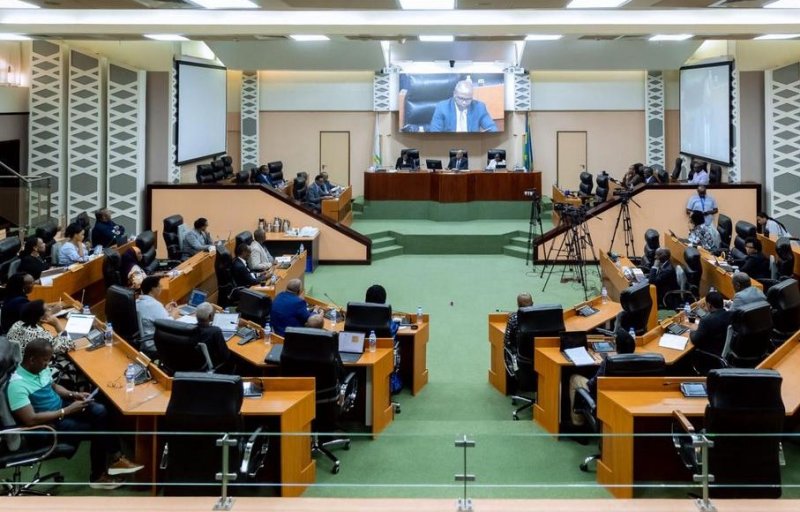
Senator Charles Murigande on Monday urged the government to significantly increase investment in agricultural research, saying it is unacceptable that hunger continues to affect parts of the country despite generally favorable rainfall and long-standing efforts to modernize farming.
Sen. Murigande raised the concerns during a Senate session with the Minister of Agriculture and Animal Resources, as lawmakers questioned how Rwanda can achieve food security amid climate shocks, limited arable land and rapid population growth.
Murigande said research must become the foundation of Rwanda’s agricultural strategy, arguing that scientific innovation not land expansion offers the most realistic path to higher productivity.
“Rwanda’s land is limited and cannot be expanded,” Murigande told the Senate. “What will save us is heavy investment in research.”
He said research should guide decisions on crop selection, yield improvement, livestock feed and product quality, enabling farmers to adapt to changing weather patterns and regional conditions.
Murigande cited Israel as an example of a country that has overcome land and climate constraints through innovation, noting that much of its agricultural success is rooted in sustained research and technology.
“It does not make sense for people in Rwanda to die of hunger,” he said, adding that while rainfall may vary by region, it does not disappear across the entire country at once.
The senator also questioned why Rwanda’s highly trained agricultural specialists are not being fully mobilized to develop improved seed varieties and farming methods tailored to different regions.
His remarks come as food shortages persist in parts of eastern Rwanda, particularly in Kayonza District, where prolonged dry conditions have affected sectors including Ndego, Mwiri, Kabare and Rwinkwavu. The crisis forced some residents to leave their homes in search of food and led to the dismissal of several district officials late last year.
Responding to lawmakers, Agriculture Minister Telesphore Ndabamenye said the government has prioritized research to guide investment and technology use in agriculture, especially as Rwanda’s population is projected to reach 22 million by 2050.
Ndabamenye warned that continuing with current farming practices would make food self-sufficiency unattainable. He said traditional methods would require more than 10 million hectares of farmland—far beyond Rwanda’s capacity.
However, he said modern farming techniques could reduce land needs to about 3.4 million hectares, while applying international agricultural standards would require roughly 1.4 million hectares—an achievable target given Rwanda’s current cultivated area of just over 1.3 million hectares.
The minister said scaling up research and innovation will be critical to closing that gap and strengthening food security in the years ahead.
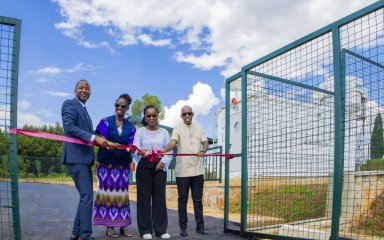
Rwanda on Thursday inaugurated its first Automatic Upper-Air Station, a facility designed to strengthen the (…)

Rwanda Development Board (RDB) has temporarily suspended operations at four hotels after inspections found they (…)

Electric bus company BasiGo plans to introduce 18 new electric passenger buses in Rwanda as part of efforts to (…)

Minister of Foreign Affairs and International Cooperation, Olivier Nduhungirehe, met South Korean President Lee Jae (…)