
 RW
Local food prices outpace imported goods as Rwanda inflation accelerates
Prices of locally produced goods in Rwanda rose more than twice as fast as those of imported products over the year (…)

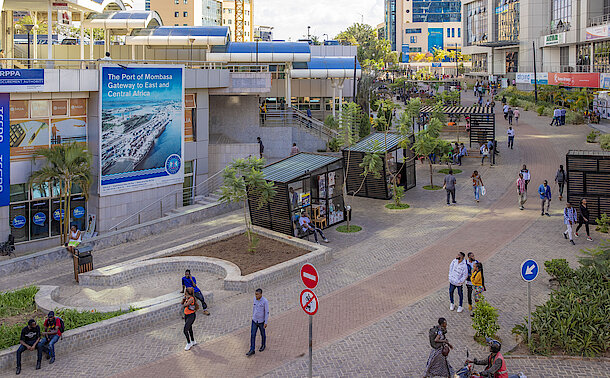
Money sent to Rwanda by citizens living abroad increased by 31.1% in the first half of 2026, helping improve the country’s external position, according to S&P Global Ratings.
The increase in remittances, alongside strong growth in mineral exports, helped narrow Rwanda’s external deficit to 10.9% of gross domestic product, from 13.4% a year earlier.
The figures were included in S&P’s latest assessment of Rwanda, published on November 16. The agency maintained the country’s long-term foreign- and local-currency credit ratings at B+, with a stable outlook.
S&P also expects Rwanda’s usable foreign-exchange reserves to average about $2.3 billion between 2026 and 2029, while noting that the Rwandan franc has remained broadly stable.
Foreign-exchange reserves are important because they help a country meet external payment obligations, including payments for imports and foreign-currency debt.
The agency identified the country’s debt structure as another factor supporting its credit profile. Just over 87% of Rwanda’s external debt consists of long-term loans carrying relatively low interest rates, helping to limit immediate repayment pressures.
Rwanda’s economy grew by 10% year on year in the first half of 2026, largely driven by manufacturing and services, following growth of 9.3% in 2025.
S&P expects the economy to expand by 7.5% in 2026 and around 7% annually between 2027 and 2029.
The agency also expects the government’s fiscal deficit to narrow to 4.9% of GDP in the 2025/26 financial year, compared with an earlier projection of 5.7%.
Higher-than-expected tax collections and lower government expenditure contributed to the improved forecast. Lower financing costs for the New Kigali International Airport also helped reduce projected spending on its second phase in 2026 by Rwf168.2 billion.
The financing arrangement combined guarantees from the International Development Association (IDA) and the Multilateral Investment Guarantee Agency (MIGA) through the World Bank Group Guarantees Platform. Rwanda was the first country to use the structure.
Despite the improvement in external inflows, S&P identified international price pressures as a risk to Rwanda’s economic outlook.
The conflict in the Middle East has contributed to higher prices for petroleum products, fertiliser and food, putting pressure on countries that depend on imports of these commodities.
The Rwandan government has introduced targeted subsidies for diesel and fertiliser, while the National Bank of Rwanda has tightened credit conditions. S&P expects inflation to ease to 8% in 2027.
The agency maintained Rwanda’s B+ rating with a stable outlook, citing economic growth, the structure of public debt and continued access to concessional financing.
Prices of locally produced goods in Rwanda rose more than twice as fast as those of imported products over the year (…)

Two Rwandan films have won three awards at an international festival in Paris, including two prizes for Best Fiction (…)

Eligible women and girls aged 30 to 45 in Rwanda can receive free HPV vaccination at health centres nationwide, (…)
Louise Mushikiwabo will remain Secretary-General of the International Organisation of La Francophonie (OIF) for (…)