

 RW
Two Rwandan films win three awards at Paris festival
Two Rwandan films have won three awards at an international festival in Paris, including two prizes for Best Fiction (…)

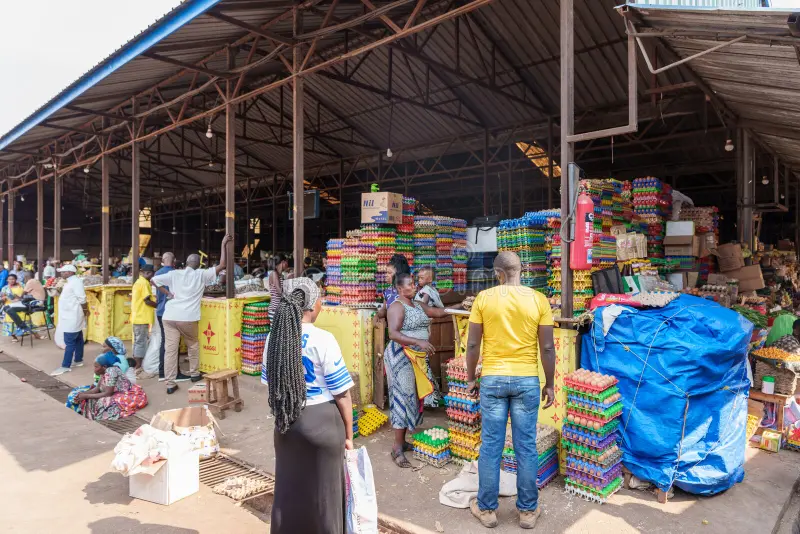
Prices of locally produced goods in Rwanda rose more than twice as fast as those of imported products over the year to October, highlighting the pressure on domestic supply as food inflation continues to drive up the cost of living.
Data from the National Institute of Statistics of Rwanda (NISR) show that locally produced goods increased in price by 22.8 per cent, compared with a 9.5 per cent rise for imported products.
Fresh produce recorded an even sharper increase of 39.9 per cent, while vegetables in urban areas became 56.4 per cent more expensive than in October 2025.
The figures come as overall urban inflation accelerated to 19.5 per cent in October 2026, up from 17.2 per cent in September. Food and non-alcoholic beverages rose by 28.9 per cent over the year and 7.8 per cent in a single month.
Trade and Industry Minister Antoine Kajangwe attributed the pressure partly to changing weather patterns that affected agricultural production and reduced the supply of food reaching markets.
The minister said rainfall had not occurred as expected, affecting agricultural activities and the volume of produce available for sale.
Kajangwe also cited the conflict involving the United States and Iran, saying its effects had increased the cost of goods Rwanda imports.
He said higher costs were affecting several parts of the economy, including agriculture, livestock farming, manufacturing and trade, as businesses faced more expensive inputs and distribution costs.
Transport prices increased by 22.4 per cent over the year to October, according to NISR, while housing, water, electricity, gas and other fuels rose by 14.2 per cent.
The increase in local food prices is also affecting businesses operating in retail markets. Mukamasabo Eliana, a trader at Mulindi market in Rusororo Sector, said she was struggling to recover the money invested in stock because customers were finding it harder to afford goods.
“Prices have risen sharply, but people have little money. We sell and fail to recover the money we spent buying the goods because we purchased them at high prices,” she said.
The figures suggest that domestic food supply is an important part of Rwanda’s current inflation challenge, alongside external costs affecting imported goods.
The October data therefore place renewed attention on agricultural production, market supply and the costs facing businesses that process and distribute food.

Two Rwandan films have won three awards at an international festival in Paris, including two prizes for Best Fiction (…)

Eligible women and girls aged 30 to 45 in Rwanda can receive free HPV vaccination at health centres nationwide, (…)

Louise Mushikiwabo will remain Secretary-General of the International Organisation of La Francophonie (OIF) for (…)

A United Nations committee has approved a resolution calling on countries to stop mercenaries from using their (…)