Rwanda launches $6.7 million effort to restore Nyungwe national park
Rwanda plans to spend about 9.8 billion Rwandan francs ($6.7 million) to restore sections of Nyungwe National Park (…)

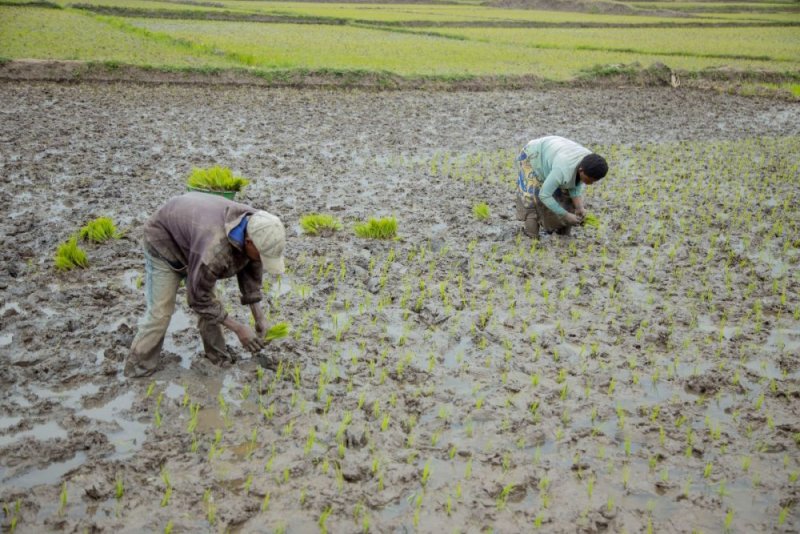
The Rwanda Biomedical Center has warned wetland farmers that working barefoot and without gloves puts them at high risk of contracting bilharzia, a parasitic disease that remains widespread in the country.
Bilharzia is now present in 1,013 sectors across Rwanda, representing 47% of all sectors, according to RBC officials. The disease is spread through contaminated water and affects people who collect water from lakes, children who play in dirty water, fishermen and farmers working in wetlands, especially those living near marshes.
The warning was issued Jan. 28 during a public awareness campaign in Bugesera District’s Mareba Sector, where farmers cultivate rice in the Rwabikwano wetland. Nathan Hitiyaremye, an RBC official in the neglected diseases unit, explained that waste and sewage from higher ground flow into wetlands and support snails that carry the parasite. Farmers become infected when they wade through the water.
“Farmers should avoid contact with water so that these tiny organisms cannot enter the body,” Hitiyaremye said. “We urge people not to enter wetlands without boots or gloves.”
He added that RBC is working with partners including the Private Sector Federation, rice farmers’ cooperatives and fishing associations to develop protective clothing that covers the legs and includes gloves.
Residents trained to fight the disease said protective gear remains scarce. Nzabonimpa Hegman, a Mareba resident, said ordinary shoes fall off in flooded fields, making it difficult to work without direct contact with water.
“If the government provides suitable boots for farmers, it will help,” he said. “We are also improving hygiene by building latrines and avoiding open defecation.”
Bugesera District has distributed praziquantel, a medication used to treat bilharzia, to more than 230,000 residents across 43 sectors. Symptoms include fever, body aches, abdominal pain, blood in urine or stool, and swelling of the abdomen.
Globally, more than 240 million people are infected with bilharzia each year, and the disease contributes to stunted growth in children.
Rwanda plans to spend about 9.8 billion Rwandan francs ($6.7 million) to restore sections of Nyungwe National Park (…)

More than 40,000 students, teachers and other education stakeholders in Rwanda are expected to be trained in digital (…)

Rwanda has set its national budget for the 2026-27 fiscal year at 7.796 trillion Rwandan francs ($5.5 billion), (…)

The Capital Markets Youth Forum 2026 concluded Friday at the Kigali Convention Centre, bringing together students, (…)