University of Rwanda Leads €15.3M Chikungunya Vaccine Project
The University of Rwanda (UR), has launched a four-year international research project aimed at developing a vaccine (…)

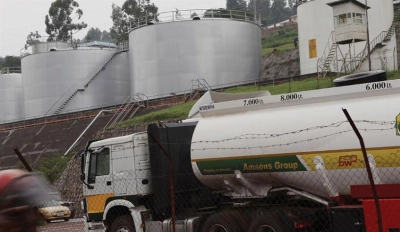
The Rwanda Revenue Authority (RRA) has ordered petroleum traders to clear nearly 2 million liters of gasoline and diesel that have remained in bonded warehouses for more than six months, giving them 30 days to comply or risk seizure of the products.
In a public notice, the tax authority said the fuel must be declared, duties paid and the products released onto the market within the deadline. It warned that noncompliant stock could be confiscated and sold by customs authorities.
The total volume identified by the RRA is 1,993,750 liters of petroleum products stored in bonded facilities operated by Yussa in Kabuye, Rubis Energy in Gatsata and Oilcom in Jabana.
Diesel makes up the largest share of the stockpile at about 1.35 million liters. The remainder includes 641,055 liters of gasoline and 5,065 liters of kerosene.
According to the published inventory, ownership of 791,832 liters of fuel was not identified.
Companies listed as holding the largest quantities include Mount Meru Petroleum with 368,998 liters, Kivu Energy Ltd with 120,361 liters and Socit Sarl with 65,404 liters.
Other firms on the list include Ukod Oil Rwanda Ltd with 29,121 liters, Hashi Energy with 27,132 liters, China Road with 24,845 liters, Gulf Energy with 18,398 liters, Hunan Road with 16,163 liters and Job Petroleum with 15,232 liters.
The RRA said the fuel had exceeded the legally permitted storage period in bonded warehouses and must now be cleared into the domestic market.
Bonded warehouses are typically used to store imported goods before customs duties are paid or before authorities authorize their release into circulation.
A person familiar with petroleum storage operations told local media that fuel left in storage often belongs to small companies that have ceased operations. Because warehouse operators do not own the products, they cannot sell or distribute them without authorization, the source said.
The RRA list also includes individual owners with fuel stored in bonded facilities, with the smallest recorded quantity listed at three liters.

The University of Rwanda (UR), has launched a four-year international research project aimed at developing a vaccine (…)

The Cabinet has approved the establishment of a national artificial intelligence institute to advance the (…)
The International Monetary Fund (IMF) has approved a $250 million loan for Rwanda under its Extended Credit Facility (…)
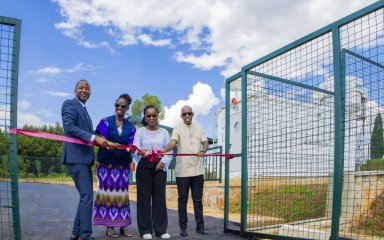
Rwanda on Thursday inaugurated its first Automatic Upper-Air Station, a facility designed to strengthen the (…)